🌌 Houston, We Have a Leaf Problem: Why Your Foliage Is Tanking Your Lawn (and How to Fix It)🌌
If you’ve ever walked outside in fall, looked at your yard, and wondered why it resembles a forgotten planet drifting through space, you’re not alone. Leaves pile up, shrubs get crunchy, debris collects in corners, and before you know it, your once-healthy lawn is entering an ecological black hole. The truth is, foliage — in all its forms — can make or break your lawn’s health.
Most homeowners know they should keep up with yard maintenance, but very few understand why dead leaves, dying shrubs, and organic clutter have such a dramatic impact on turf, soil biology, and seasonal growth. Once you realize how foliage buildup affects your lawn’s ecosystem, you’ll never look at a leaf pile the same way again.
⸻⸻⸻
🍂 Dead Leaves: The Silent Lawn Suffocator 🍂
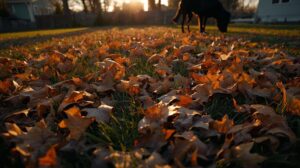
A handful of leaves never hurt anyone, but once they start forming thick layers, your lawn is in trouble. Dead leaves block sunlight, trap moisture, and keep soil colder for longer periods — all things that weaken your turf.
Researchers have found that leaving heavy layers of leaves on the lawn through winter can kill up to 80–90% of the grass underneath. That’s because the leaf layer shuts down photosynthesis entirely and creates damp, stagnant conditions that fuel fungal diseases like snow mold. Soil under thick leaf mats also warms far more slowly in spring, which delays growth and gives weeds a huge head start.
Mulching leaves is incredibly effective because it turns them into fine organic matter that decomposes back into the soil. Studies from Michigan State University show mulched leaves can cut fertilizer needs by up to 25%. But mulching only works when leaves are dry and not matted together. Waiting too long turns leaves into a dense, wet blanket — the exact environment turf hates.
If you want your lawn to bounce back each spring, the single most important rule is simple: don’t let leaf layers build up for weeks at a time. A little prevention goes a long way.
⸻⸻⸻
🌿 Dead Bushes & Shrubs: When Yard Décor Turns Into Yard Decay 🌿
Shrubs are meant to enhance your landscape, but once they start dying, they quietly undermine the health of everything around them. A dying shrub is far more than an eyesore — it becomes a drain on your soil, a magnet for pests, and a damp, shaded pocket that encourages fungal issues.
The signs are usually clear: brittle branches, peeling bark, hollow stems, and no new buds. If a quick scratch test reveals no green beneath the bark, the plant is no longer alive or functioning. Many homeowners mistake dead shrubs for “slow bloomers,” when in reality, they’re disrupting the entire micro-environment around them.
Dead shrubs attract pests such as borers and beetles, which can spread to nearby trees and plants. They also hinder airflow and trap humidity, making the surrounding soil more prone to mold and root disease. As they decompose, they can even shift the nutrient balance of the soil around them in ways that make it harder for replacement plants to thrive.
Removing dead or declining shrubs is one of the fastest ways to stabilize a landscape. According to the American Horticultural Society, prompt removal of decaying woody plants can reduce pest risk by up to 40% in the surrounding garden beds.
Healthy shrubs support healthy turf — and unhealthy ones quietly sabotage it.

⸻⸻⸻
🧹 Foliage Build-Up: The Unintentional Pest Resort 🧹
very yard collects debris over time, but when it accumulates faster than it breaks down, you end up with a hidden pest haven. Damp piles of leaves, sticks, and plant matter create dark, sheltered pockets that insects absolutely love.
The National Pest Management Association notes that yards with unmanaged debris piles see significantly higher populations of pests like:
- Mosquitoes (breeding cycles as fast as 7–10 days)
-
Slugs and snails (prefer cool, moist hiding spots)
-
Beetles and grubs (feed on decaying plant matter)
-
Spiders and centipedes (follow the other pests)
Once these pests settle in, they spread outward — first to healthy plants, then to lawns, and eventually toward the home as temperatures drop.
Beyond pests, debris buildup starves the lawn of oxygen and sunlight, creating patches of thinning turf and uneven soil moisture. Thick organic layers also slow evaporation, which encourages fungal development in the soil. Even the healthiest lawn will decline if debris is allowed to sit for weeks at a time.
A clean yard isn’t just aesthetic; it directly affects your lawn’s health, pest resistance, and long-term stability.
⸻⸻⸻
🚀 Regular Maintenance: The Real Secret to a Lawn That Stays in Orbit 🚀
It’s easy to think lawn care is all about products — the right fertilizer, the right weed control, the right tools. But the truth is, consistency outweighs everything else. Small, predictable habits have a bigger impact than any single treatment.
The Lawn Institute reports that consistent weekly maintenance can increase turf density by 30–35%, making lawns more resistant to weeds, disease, and heat stress. That density comes from strong, deep root systems — something you only get when your lawn isn’t constantly battling suffocation, debris, or dehydration.
Watering is one of the most misunderstood parts of lawn care. Overwatering creates shallow roots, fungus, and compacted soil, while underwatering leads to drought stress. The sweet spot is watering deeply but infrequently, allowing soil to dry slightly between sessions. Morning watering is best because it limits evaporation and gives grass blades time to dry during the day.
Maintaining clean edges, clearing gutters, removing dead shrubs, and breaking up compacted spots all contribute to a stable outdoor ecosystem. The goal is balance — giving your lawn the airflow, sunlight, and water distribution it needs to operate like a well-calibrated system.
Healthy lawns aren’t built through dramatic efforts. They’re built through quiet, steady routines.

⸻⸻⸻
🌱 Why All of This Actually Matters: The Ecosystem Behind Your Curb Appeal 🌱
A lawn is more than a patch of green — it’s an interconnected system. Everything from soil microbes to sunlight exposure to airflow contributes to its health. When foliage piles up or plants begin decomposing in place, the entire system reacts, and not in a good way.
Healthy lawns depend on strong root systems, proper oxygen circulation, efficient nutrient recycling, and controlled moisture levels. When these conditions are disrupted, lawns become vulnerable. Weak roots struggle during temperature swings, fungal problems become more aggressive, and pests gain easy access.
Maintaining foliage doesn’t just help your lawn look better — it helps it survive and remain highly functional. Clean, well-kept lawns support beneficial soil organisms, encourage deeper root development, and resist stress far more effectively than neglected ones.
And of course, there’s the financial angle. According to the National Association of Realtors, well-maintained landscaping can increase perceived home value by 7–10%, and buyers consistently rank lawn condition as a top factor when evaluating curb appeal.
Your lawn is a living ecosystem. When you take care of the foliage, you take care of everything beneath it — and everything that grows from it.
⸻⸻⸻
🌤️ Soil Health & Compaction: The Hidden Force Working Against Your Lawn 🌤️
Even when a lawn looks “fine” on the surface, the real story is happening below ground — and most homeowners don’t realize how quickly soil health can deteriorate. Compacted soil is one of the biggest obstacles to a thriving lawn, yet it’s nearly invisible until the symptoms start showing up months later.
When soil becomes compacted, the particles are squeezed tightly together, leaving very little room for air or water to move. Grass roots suffocate under these conditions, struggling to grow deeper or expand outward. Instead of creating a strong, resilient foundation, the grass develops shallow, weak roots that dry out quickly and fail under heat or heavy foot traffic. Compacted yards often appear patchy, thin, or hard as concrete — especially in high-traffic areas.
Core aeration is one of the most effective solutions, and it’s much simpler than most people think. By pulling small plugs of soil from the ground, you instantly improve air exchange, water absorption, and nutrient flow. The Lawn Institute reports that aerated lawns can absorb water 2–3 times faster than compacted lawns, reducing runoff and helping roots grow deeper.
Another often overlooked factor is soil pH. Grass prefers a slightly acidic environment (around 6–6.8), but leaves, debris, and decomposing shrubs can throw those levels off. When the pH drifts too far in either direction, grass struggles to absorb essential nutrients even if the soil technically contains them. A simple soil test once a year can save homeowners time, money, and guesswork, showing exactly what their lawn needs to perform well.
Healthy soil is the foundation of a healthy lawn — without it, even the best maintenance routines don’t stand a chance.
⸻⸻⸻
🌨️🔥 Seasonal Stress & Weather Extremes: Protecting Your Lawn From the Elements🔥🌨️
Weather is the one factor homeowners can’t control, but they can control how well their lawn is prepared for environmental stress. Extreme heat, drought conditions, heavy snow, and rapid temperature swings all put pressure on the turf. Whether or not it survives depends heavily on how well the lawn is maintained the rest of the year.
Heat stress is a growing issue across many regions. Prolonged sun exposure and high temperatures can cause grass to enter dormancy, turn brown, or develop dry, brittle patches. Lawns under heat stress often need deeper, less frequent watering — not extra daily soaking. Shallow, frequent watering encourages weak roots that can’t reach the cooler soil deeper down.
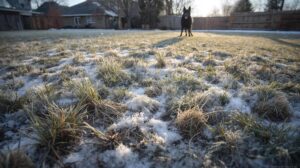
Cold stress works the same way in reverse. Heavy snowfall or long freezes compress grass blades, suffocate roots, and trap moisture against the soil surface. Thick layers of dead leaves beneath the snow increase the risk of snow mold, which can wipe out large patches of turf by spring. This is why fall cleanup matters far more than homeowners realize.
Wind also plays a role in lawn health. Strong gusts pull moisture from the soil faster than the sun can, leaving roots dehydrated even during cooler seasons. Strategic trimming of shrubs, proper mulching, and maintaining a stable soil structure all help buffer the lawn from weather extremes.
A well-maintained lawn is naturally more resilient. Research from university turf programs shows that lawns with deep root systems are 50% more likely to recover from seasonal stress compared to lawns with shallow roots or inconsistent care routines. The goal isn’t to eliminate environmental stress — it’s to strengthen your lawn so it can withstand it.
When your yard is consistently maintained, seasonal changes become challenges it can handle, not disasters waiting to happen.